
If you're a Bay Area investor looking beyond the mainland for your next property play, 2026 might be the year to set your sights on Hawaii's Big Island. Specifically, Kailua Kona is presenting a unique window of opportunity that smart money is starting to notice.
While Maui implements strict new regulations that effectively shut down most short-term vacation rentals, the Big Island maintains its investor-friendly stance: particularly in established resort areas. This regulatory shift is creating a perfect storm of opportunity for savvy investors willing to look beyond the obvious choices.
The Maui Disruption Creates Big Island Opportunity
The recent crackdown on short-term vacation rentals in Maui has sent shockwaves through Hawaii's tourism and investment landscape. Properties that once generated substantial rental income are now forced into long-term housing or removed from the rental market entirely.
But here's what most investors are missing: this doesn't eliminate demand for Hawaii vacation rentals: it just redirects it.

The Big Island, particularly areas like Kailua Kona, still welcomes short-term vacation rentals in designated resort zones. As Maui's inventory shrinks, tourists and travelers are increasingly looking to the Big Island for their Hawaii experience. This demand shift is already beginning to show up in booking rates and rental premiums.
For Bay Area tech professionals and investors, this represents a classic arbitrage opportunity. You're essentially betting on regulatory differences between islands: a bet that's looking increasingly solid as Maui's restrictions take full effect.
Why Kailua Kona Pricing Is at Historic Lows
Recent market data shows Kailua Kona condo prices have dropped to remarkably attractive levels. The median condo price sits around $620,000: down 5% year-over-year: while inventory has tightened significantly in resort areas.
This price dip isn't due to fundamental problems with the market. Instead, it reflects broader economic uncertainty and the natural cooling that follows any rapid price appreciation. For investors, this creates the classic "buy when others are fearful" scenario that Warren Buffett famously advocates.
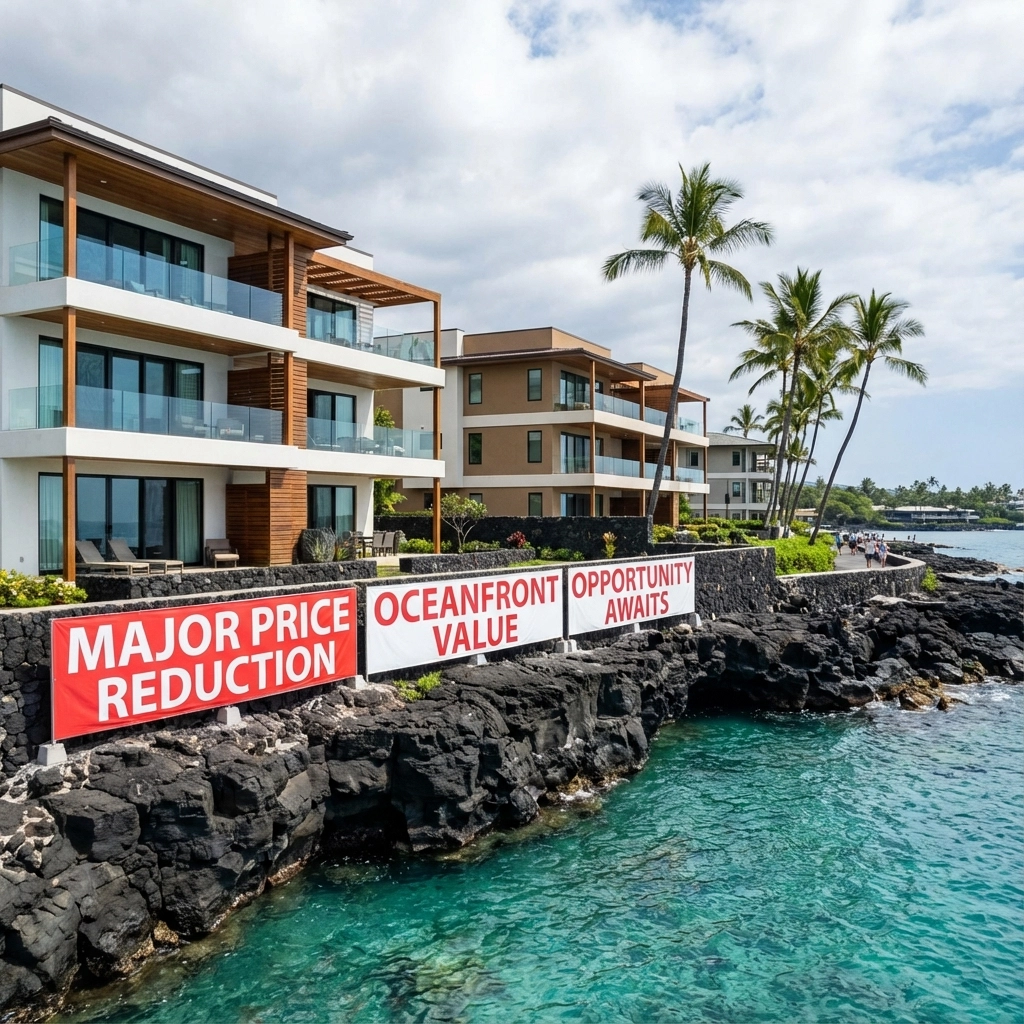
Compare this to what you'd pay for similar oceanfront or resort properties in California, and the value proposition becomes crystal clear. A $600,000 investment in Kailua Kona gets you significantly more property: and rental income potential: than the same amount invested in most Bay Area markets.
The key insight here is timing. Properties are spending an average of 53 days on market, giving serious buyers negotiating power that hasn't existed in years. Sellers are motivated, inventory in prime resort areas remains limited, and financing costs, while higher than pandemic lows, have stabilized.
The Short-Term Rental Advantage
Here's where the opportunity gets really interesting: Kailua Kona's resort-zoned properties can still operate as short-term vacation rentals. This isn't just about current regulations: it's about the trajectory of Hawaii's tourism policy.
As Maui continues to restrict vacation rentals and other islands consider similar measures, the Big Island's more accommodating stance becomes increasingly valuable. Properties with existing short-term rental permissions are essentially grandfathered assets that become more scarce: and valuable: over time.

The numbers make sense too. Well-located Kailua Kona vacation rentals can command $200-400 per night, depending on the property and season. Even with Hawaii's higher operating costs and property taxes, the cash flow potential significantly exceeds most mainland investment properties.
For Bay Area investors accustomed to cap rates under 4%, the 6-8% potential returns in Kailua Kona vacation rentals represent a meaningful yield pickup: especially when you factor in potential appreciation as the regulatory environment tightens elsewhere in Hawaii.
The SFO Connection Makes Management Easy
One of the biggest barriers to out-of-state real estate investment is management complexity. Hawaii solves this problem with direct flights from San Francisco International Airport to Kona International Airport in just over five hours.
This accessibility means you can actually visit and monitor your investment property without the logistical nightmare of connecting flights or cross-country travel. Weekend property visits become feasible, and dealing with any issues that arise doesn't require major travel planning.

The flight frequency and convenience also matter for your tenants and vacation rental guests. Properties accessible via direct flights from major West Coast cities command higher rents and occupancy rates than those requiring connections or secondary airports.
Market Fundamentals Support Long-Term Growth
Beyond the short-term opportunity created by regulatory arbitrage, Kailua Kona's fundamentals support long-term property appreciation. The Big Island's population continues growing, driven by both mainland migration and natural increase. Hawaii's supply constraints: limited land, strict building regulations, and environmental protections: ensure that housing supply struggles to keep pace with demand.
Tourism to the Big Island has recovered strongly from pandemic lows and continues expanding. The island's diverse attractions: from Mauna Kea's world-class observatories to Hawaii Volcanoes National Park: create multiple demand drivers that don't depend solely on beach tourism.
The area's appeal to remote workers and digital nomads adds another demand layer. As more professionals embrace location independence, Hawaii's quality of life and modern infrastructure make it an attractive base: especially for those who need to maintain West Coast business connections.
Investment Strategy Considerations
For Bay Area investors considering Kailua Kona properties, focus on resort-zoned condominiums and townhomes with existing short-term rental permits. These properties offer the highest appreciation potential as Hawaii's regulatory environment continues evolving.
Look for properties within established resort communities that offer professional management services. While you can manage rentals yourself, having local expertise becomes invaluable for maximizing occupancy and handling guest services.

Consider the total cost of ownership, including Hawaii's higher property taxes, HOA fees, and maintenance costs. Factor these into your cash flow projections, but don't let them deter you if the overall returns and appreciation potential justify the investment.
The Window Is Closing
Market opportunities like this don't last indefinitely. As more investors recognize the arbitrage opportunity between Maui's restrictions and the Big Island's openness, competition for the best properties will intensify.
Early 2026 represents the sweet spot: after the initial market adjustment but before widespread recognition drives prices back up. Properties that seem "expensive" at current prices may look like bargains within 12-24 months as the market fully adjusts to Hawaii's new regulatory reality.
For Bay Area investors with capital to deploy and a timeline longer than 2-3 years, Kailua Kona offers a compelling combination of current value, cash flow potential, and long-term appreciation prospects. The regulatory disruption in Maui has created an opportunity that smart money won't ignore much longer.
If you're ready to explore investment opportunities beyond the Bay Area's increasingly expensive market, Kailua Kona deserves serious consideration. The combination of attractive pricing, regulatory advantages, and strong market fundamentals creates an investment thesis that's hard to replicate elsewhere in today's market.
Leave a Reply