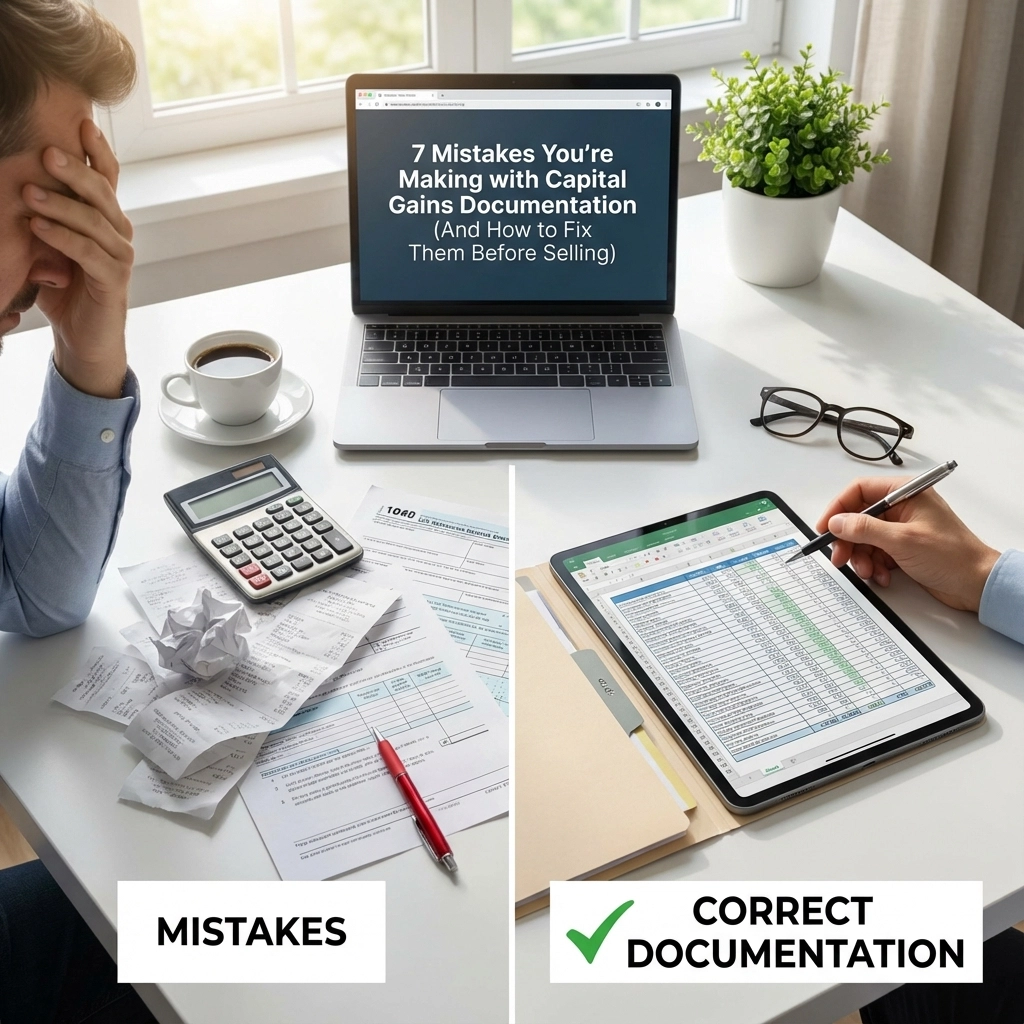
You've been living in your South Bay home for years, watching its value climb alongside your tech career. Now you're ready to sell and move on to your next chapter. But before you list that Cupertino condo or Los Gatos estate, there's something crucial you need to handle: your capital gains documentation.
Here's the thing – even smart, detail-oriented tech professionals make costly mistakes when it comes to capital gains paperwork. And in the South Bay, where home values can easily exceed $2 million, these documentation errors can cost you tens of thousands of dollars in unnecessary taxes.
Don't worry though – we've got your back. Let's walk through the seven most common capital gains documentation mistakes we see from Silicon Valley homeowners, plus exactly how to fix them before you put that "For Sale" sign on your lawn.
Mistake #1: Not Keeping Records of Home Improvements
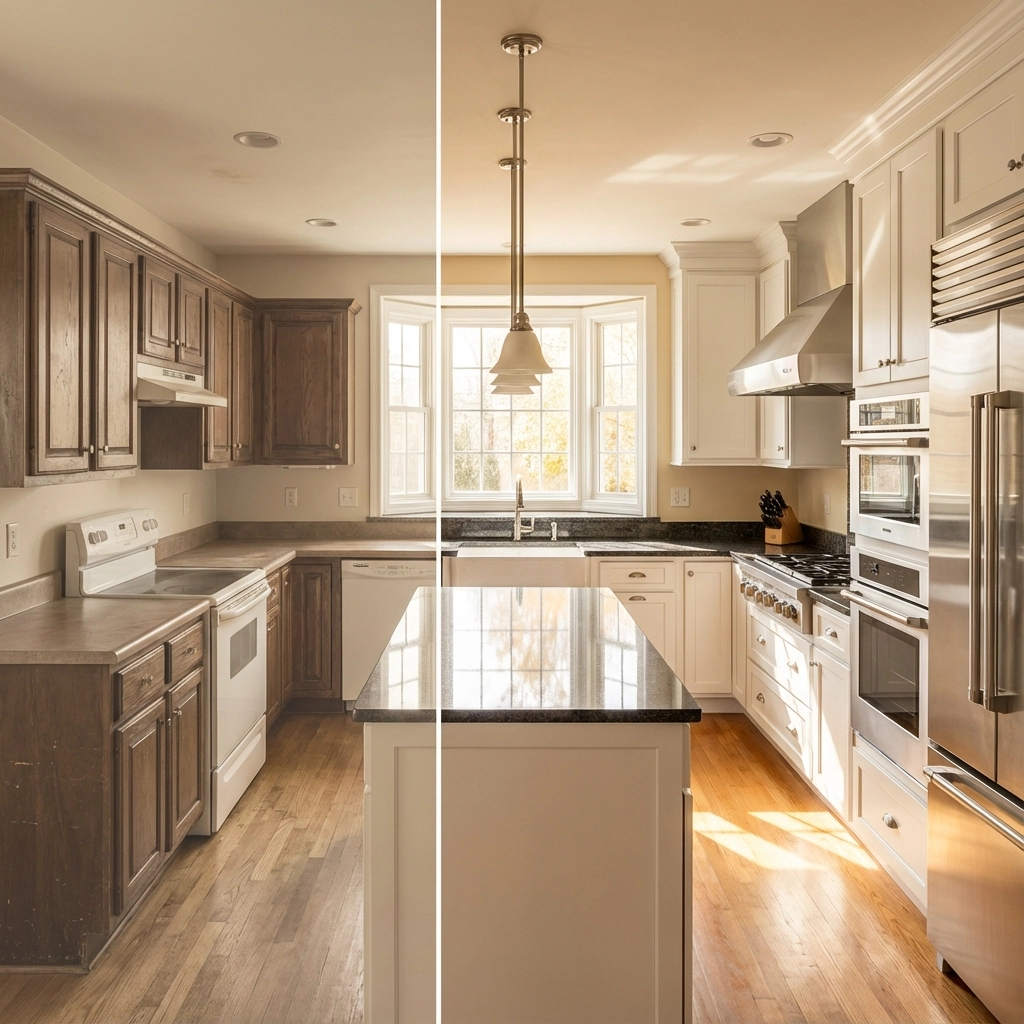
This is the big one. You spent $80,000 on that kitchen remodel in 2019, another $25,000 on new flooring throughout the house, and $15,000 on landscaping that gorgeous backyard. But if you can't prove it to the IRS, those improvements won't reduce your capital gains tax.
The Fix: Start gathering those receipts right now. Look for:
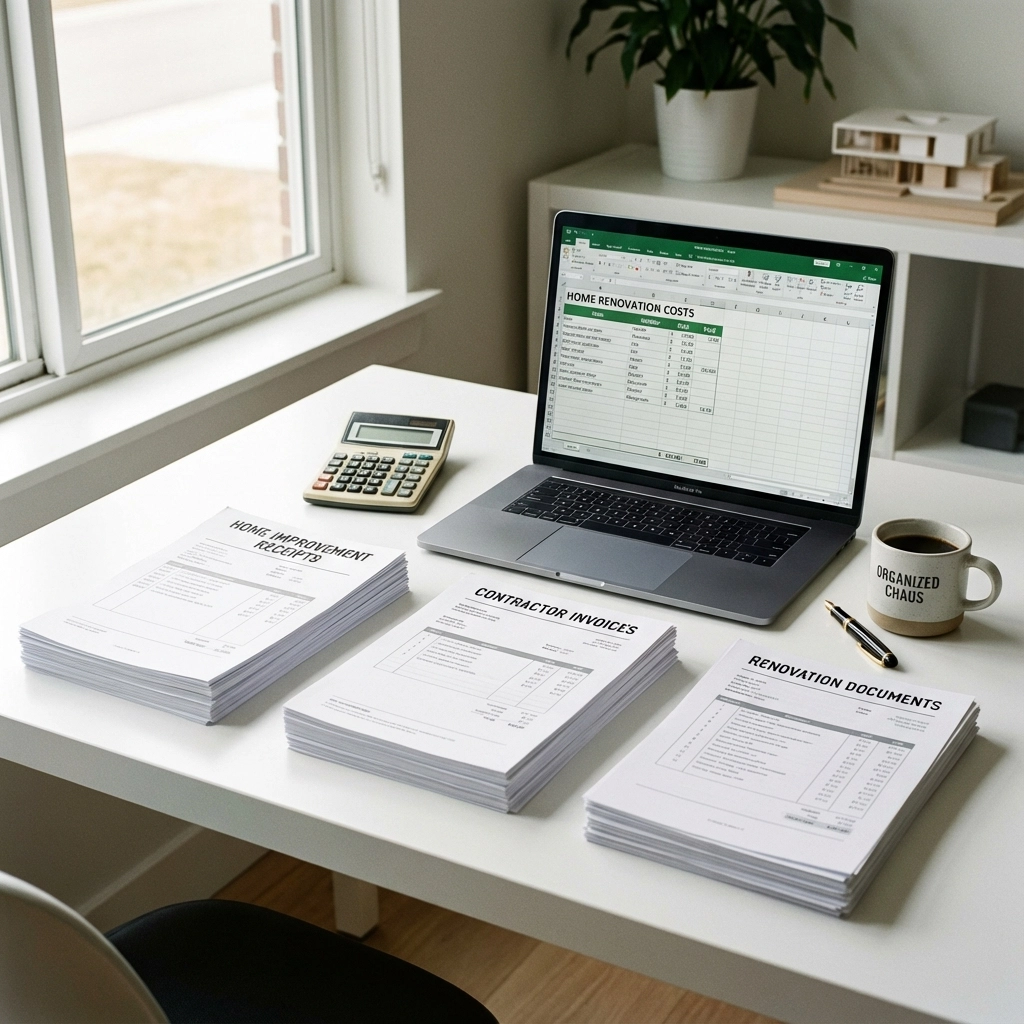
- Contractor invoices and receipts
- Permits pulled with the city
- Credit card statements showing payments to Home Depot, contractors, or design firms
- Photos showing before and after (these help prove the work was done)
- Bank statements showing large payments to contractors
Create a simple spreadsheet with the date, type of improvement, cost, and where you can find the documentation. Remember, routine maintenance doesn't count – you need capital improvements that add value or extend the home's life.
Mistake #2: Miscalculating Your Cost Basis
Your cost basis isn't just what you paid for the house. It includes your original purchase price, plus closing costs, plus qualifying improvements, minus any depreciation you've claimed. Getting this wrong can mean paying taxes on money that isn't actually profit.
The Fix: Pull together:
- Your original purchase agreement and closing statement (HUD-1 or Closing Disclosure)
- All those improvement records from Mistake #1
- Any major repairs that qualify as improvements (replacing the roof, HVAC system, etc.)
- Records of any depreciation claimed if you used part of your home as a home office
Let's say you bought your Sunnyvale home for $800,000 in 2015, paid $12,000 in closing costs, and put $120,000 into improvements. Your cost basis is $932,000, not $800,000. On a $1.5 million sale, that's a $132,000 difference in your taxable gain calculation.
Mistake #3: Missing the Two-Year Residency Requirement Documentation
To qualify for the IRS Section 121 exclusion (up to $250,000 for singles, $500,000 for married couples), you need to prove you lived in the home as your primary residence for at least two of the past five years. The IRS doesn't just take your word for it.
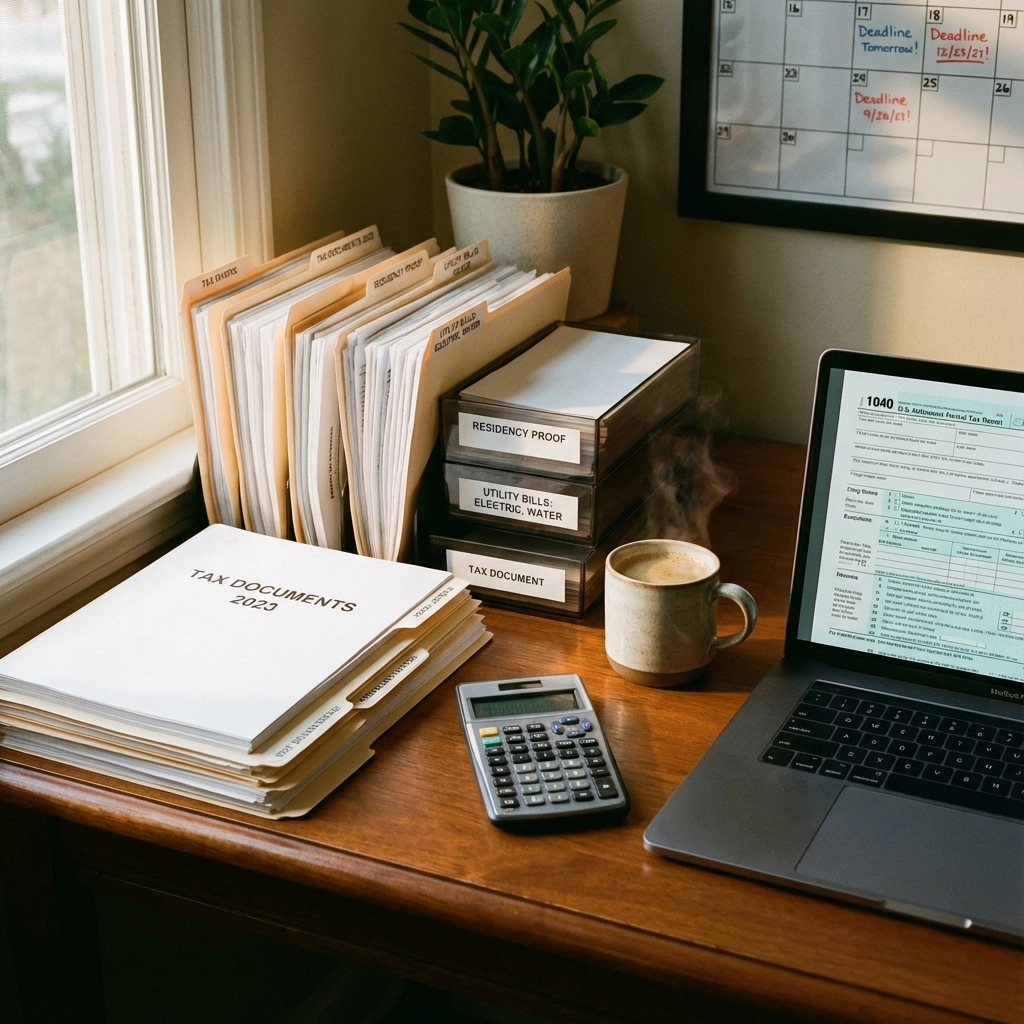
The Fix: Gather proof of residency:
- Voter registration records
- Tax returns showing your home address
- Utility bills in your name
- Bank and credit card statements sent to the address
- Employment records showing your address
- Insurance policies
- DMV records
If you worked remotely during 2020-2022 and spent extended time elsewhere, make sure you can still prove the home remained your primary residence. The IRS looks at where you spent the majority of your time and where your primary life activities occurred.
Mistake #4: Poor Timing of Your Sale
Selling at the wrong time can cost you big. If your gain exceeds the $250,000/$500,000 exclusion, timing your sale for a year when your income is lower can save thousands in capital gains taxes.
The Fix: Look at your total income picture:
- Are you between jobs and expecting lower income this year?
- Did you have stock losses you can harvest to offset gains?
- Are you taking a sabbatical or reducing work hours?
- Do you have other major expenses that might lower your AGI?
For example, if you're a tech worker who just exercised ISOs and will have high income this year, it might make sense to wait until next year to sell. Capital gains rates jump from 15% to 20% once your income hits certain thresholds ($492,300 for singles, $553,850 for married filing jointly in 2024).
Mistake #5: Not Understanding the $250,000/$500,000 Exclusion Limits
Many South Bay homeowners assume they can exclude all their gain up to the limit, but there are catches. The exclusion is per person, and if you've used it on another property in the past two years, you can't use it again.
The Fix: Check your history:
- Have you or your spouse sold another primary residence in the past two years and claimed the exclusion?
- If you're married, did both spouses meet the ownership and use tests?
- Are you divorced and need to coordinate with an ex-spouse?
Also, remember that if your gain exceeds the exclusion limit, you'll owe capital gains tax on the excess. On a $2.2 million sale with a $900,000 cost basis, you'd have a $1.3 million gain. After the $500,000 exclusion (if married), you'd still owe tax on $800,000.
Mistake #6: Failing to Track Depreciation if You Rented Out Part of Your Home
Did you rent out your in-law unit on Airbnb? Use part of your home as a home office and claim depreciation? The IRS requires you to "recapture" that depreciation when you sell, even if you qualify for the primary residence exclusion on the rest of the gain.
The Fix: Calculate your depreciation recapture:
- Pull all tax returns where you claimed home office deduction or rental depreciation
- Calculate the percentage of the home used for business/rental
- Determine how much depreciation you claimed
- That amount is taxed as ordinary income (up to 25%) when you sell
If you claimed $20,000 in home office depreciation over the years, you'll owe tax on that $20,000 even if the rest of your gain is excluded under Section 121.
Mistake #7: Not Consulting Tax and Legal Professionals Before Selling
This is where many DIY-minded tech professionals trip up. Capital gains rules are complex, and the stakes are high in the South Bay market. A small mistake in documentation or timing can cost you more than the professional fees.
The Fix: Assemble your team early:
- CPA or tax attorney to review your situation and optimize timing
- Real estate agent familiar with high-value South Bay transactions (like our team!)
- Estate planning attorney if your home sale affects your overall wealth planning
Don't wait until after you've sold to discover you could have structured things differently. A few hundred dollars in professional fees upfront can save you thousands in unnecessary taxes.
Taking Action Before You List
Here's your action plan for the next 30 days:
Week 1: Gather all your purchase documents, closing statements, and improvement records. Create that spreadsheet we talked about.
Week 2: Calculate your estimated gain and see if you'll exceed the exclusion limits. If so, start planning timing and tax optimization strategies.
Week 3: Meet with your tax professional to review everything and identify any gaps in documentation.
Week 4: Connect with a real estate agent who understands capital gains implications and can help coordinate the sale timing with your tax strategy.
Remember, in today's South Bay market, proper capital gains planning isn't just smart – it's essential. With median home prices well above $1.5 million in many areas, the difference between good documentation and poor documentation can easily be $50,000 or more in tax savings.
The good news? You're reading this before you sell, which means you still have time to get it right. Take these steps seriously, gather your documentation, and don't be afraid to invest in professional help. Your future self (and your bank account) will thank you.
Ready to start planning your South Bay home sale with capital gains optimization in mind? Let's chat about your specific situation and make sure you keep as much of your hard-earned equity as possible.
Leave a Reply