
You've found your dream home in the South Bay. The listing just hit the market, and you know there will be multiple offers by Sunday. Your agent mentions that most buyers in the area submit "non-contingent" offers to stay competitive. Should you follow suit and release all your contingencies upfront?
This question keeps many Bay Area buyers awake at night, and for good reason. Waiving contingencies can make or break your offer in our competitive market, but it also exposes you to some financial risk.
Understanding Bay Area Market Reality
In the Bay Area, sellers typically complete pre-listing inspections and provide full disclosure packets before going on market. Standard items include: home inspection, pest/termite, roof, and sewer (as applicable); Transfer Disclosure Statement (TDS); Natural Hazard Disclosure (NHD); Agent Visual Inspection Disclosure (AVID); permits, warranties, and receipts. Buyers and their agents review these documents before writing an offer.
This front-loaded documentation reduces uncertainty for both sides. Buyers can evaluate condition, repair scope, and risk in advance and, as a result, many choose to release all contingencies at the time of offer after completing this review.
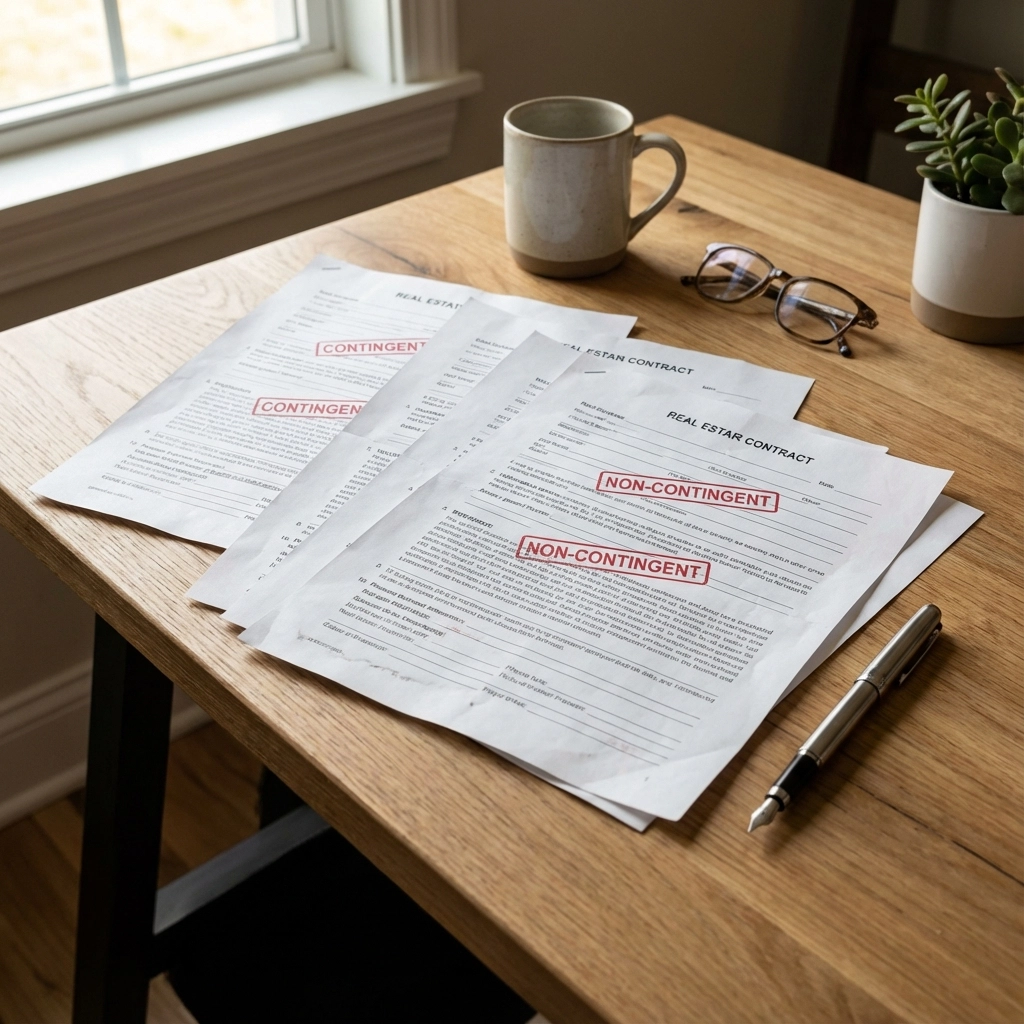
For sellers, non-contingent offers signal certainty. For buyers, thorough pre-listing inspections and complete disclosure packets lower risk when carefully reviewed with an experienced agent.
The Three Main Contingencies Buyers Consider Waiving
Inspection Contingency
This contingency gives you the right to inspect the property and negotiate repairs or cancel the contract if significant issues are discovered. In a standard purchase agreement, you typically have 17 days to complete inspections and decide whether to proceed.
Appraisal Contingency
This protects you if the property doesn't appraise for the purchase price. With this contingency in place, you can renegotiate the price or walk away if the appraisal comes in low.
Loan Contingency
This contingency allows you to cancel the contract if you can't secure financing within a specified timeframe. It's your safety net if loan approval falls through.
The Risks of Going Non-Contingent
Before you decide to waive contingencies, understand what you're risking. When you submit a non-contingent offer, you're putting your earnest money deposit, typically 1-3% of the purchase price, at serious risk. That risk is reduced when the seller provides comprehensive pre-listing inspections and a complete disclosure packet that you and your agent have reviewed in detail before submitting the offer.
If you discover major structural issues during your "informational" inspection, you can't use those findings to negotiate a lower price or walk away without consequences. You're committed to the purchase regardless of what you find.
Similarly, if the property appraises for significantly less than your offer price, you'll need to bring additional cash to closing to make up the difference. In the South Bay, where homes sometimes sell for $100,000+ over asking, this can mean coming up with an extra six figures on short notice.

How to Protect Yourself While Staying Competitive
The key to success in Bay Area real estate isn't necessarily about taking maximum risk, it's about taking calculated, informed risk. Here's how experienced buyers protect themselves while remaining competitive:
Pre-Offer Due Diligence
Request and review the full disclosure packet before drafting an offer. Typical contents: TDS, NHD, AVID, seller questionnaires, home/pest/roof/sewer inspections, permits, warranties, and receipts. Verify dates, scope, and the professionals who performed each inspection.
Review with your agent line by line. Identify defects, recommendations, and potential costs. Ask for clarifications, missing pages, or contractor bids if needed. If the packet is complete and no major issues remain, releasing the inspection contingency at offer may be appropriate.
Work with a Knowledgeable Local Agent
Use an experienced South Bay agent to audit the disclosure packet and inspections. Verify completeness, reconcile inconsistencies, and flag missing items. Cross-check disclosures with a property walkthrough and permit history.
Have the agent estimate repair and upgrade budgets and advise which contingencies, if any, to retain or shorten. Confirm lender readiness if releasing loan or appraisal contingencies.
Financial Preparation
Never waive contingencies unless you're financially prepared for worst-case scenarios. This means having enough cash reserves to cover appraisal gaps, unexpected repair costs, and still maintain an emergency fund.
A good rule of thumb: if you're waiving the appraisal contingency, be prepared to pay 5-10% more than your offer price if needed. If you're waiving the inspection contingency, set aside $20,000-50,000 for potential repairs, depending on the home's age and condition.

Strategic Alternatives to Full Contingency Waivers
You don't always need to choose between maximum protection and maximum competitiveness. Consider these middle-ground approaches:
Shortened Contingency Periods
Instead of waiving contingencies entirely, consider shortening the timeframes. For example, you might keep your inspection contingency but reduce it from 17 days to 7 days. This shows the seller you're serious while giving you a brief window to uncover major issues.
Partial Contingency Waivers
You might waive your appraisal contingency but keep your inspection contingency, or vice versa. This approach allows you to manage the risks you're most comfortable with while still making your offer more attractive.
Higher Earnest Money Deposits
Sometimes increasing your earnest money deposit from 1% to 3% of the purchase price can make your contingent offer more attractive than a non-contingent offer with minimal earnest money.
When Non-Contingent Offers Make Sense
Despite the risks, there are situations where waiving contingencies is the smart move:
- You're buying a newer home (less than 10 years old) with good disclosure documentation
- The seller has provided comprehensive pre-sale inspection reports showing no major issues
- You have significant cash reserves and can afford potential surprises
- The property has been extensively renovated with permits and warranties
- You're competing against multiple cash offers and need every advantage
Red Flags That Should Give You Pause
Certain situations should make you think twice about waiving contingencies:
- The seller refuses to provide pre-sale inspection reports
- The home was built before 1978 (potential lead paint issues)
- You notice obvious maintenance issues during your initial walkthrough
- The property has a history of foundation, electrical, or plumbing problems
- You're already stretching financially to make the purchase

Making Your Decision
Ultimately, the decision to waive contingencies depends on your specific situation, risk tolerance, and the particular property you're buying. The most successful Bay Area buyers don't follow a one-size-fits-all approach, they make strategic decisions based on thorough analysis of each opportunity.
Start by honestly assessing your financial position. Can you afford to lose your earnest money if something goes wrong? Do you have enough cash reserves to handle appraisal gaps or unexpected repairs? If the answer is no, maintain your contingencies and focus on making your offer competitive in other ways, such as offering a higher price or shorter escrow period.
If you decide to waive contingencies, do it strategically. Never waive all contingencies on every offer just because it's "what everyone does." Each property and situation is unique, and your approach should reflect that.
Working with Your Agent
Your real estate agent plays a crucial role in helping you navigate these decisions. They should provide honest guidance about market conditions, help you analyze disclosure documents, and ensure you understand the risks you're taking.
Don't work with an agent who automatically recommends waiving all contingencies without thoroughly discussing your situation. The best agents help you find the sweet spot between competitiveness and protection based on your specific circumstances and the property you're buying.

The Bay Area real estate market rewards preparation, knowledge, and strategic thinking. While waiving contingencies can give you a competitive edge, it's not a decision to make lightly. Take the time to understand the risks, prepare financially, and work with experienced professionals who can help you make informed decisions.
Remember, buying a home is likely the largest financial transaction of your life. It's worth taking the time to do it right, even in our fast-moving market. The goal isn't just to get your offer accepted: it's to successfully close on a home you'll love without taking unnecessary financial risks along the way.
Leave a Reply